Skip to content
00. [ GUIDE ]

Is Monaco a tax haven? The lists, the law and the State's accounts

Written by Julien Rossi, Tax, licensing and compliance lead. Reviewed by Camille Perrin. Updated 20 September 2026. Reading time 13 minutes.

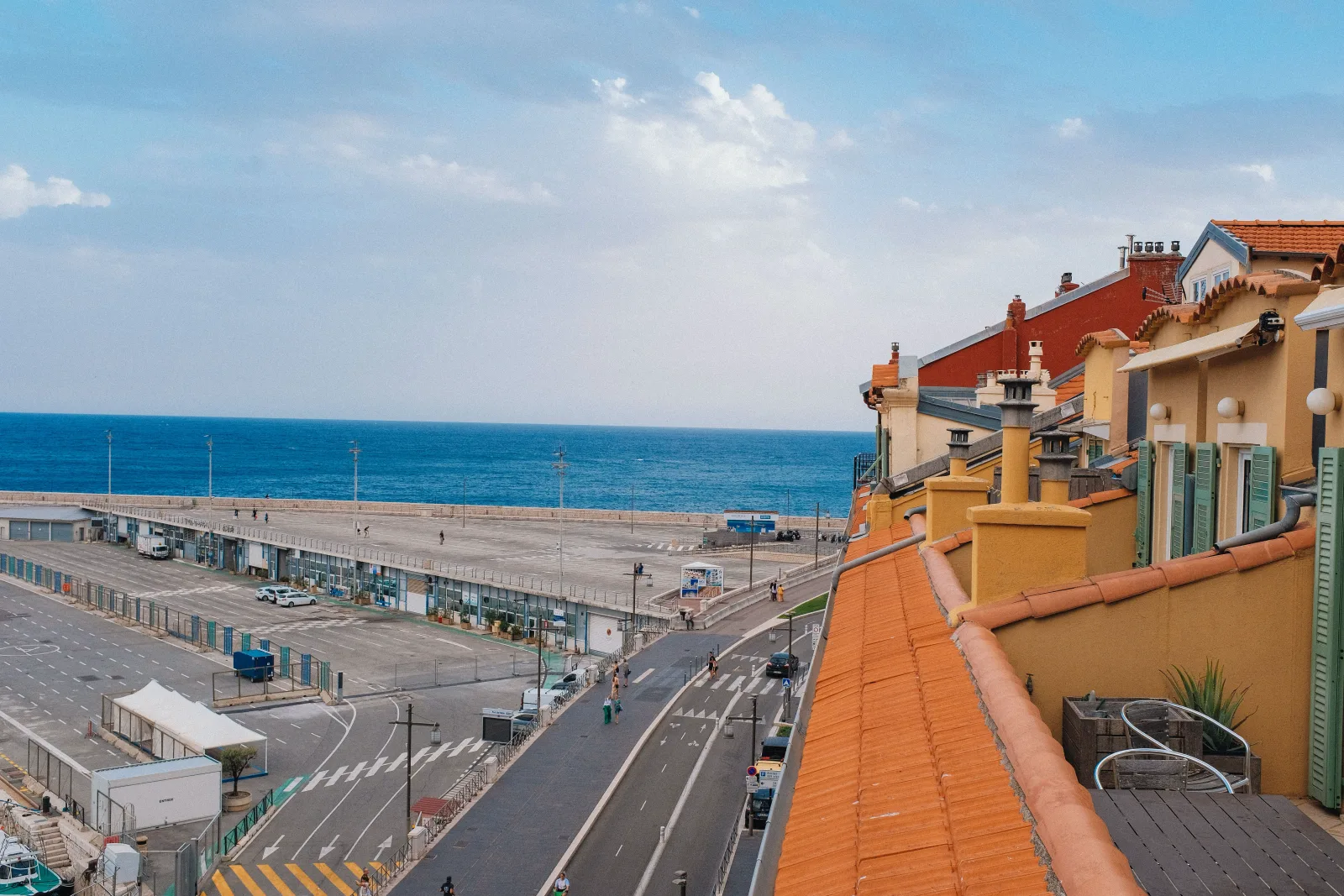
The Principality of Monaco seen from above in daylight, with the harbour and the apartment blocks behind it.
01.

Short answer

Monaco levies no income tax on individuals, French nationals excepted, and has not since 1869. It taxes company profits at 25% where at least 25% of turnover comes from outside the Principality. Monaco is absent from the EU tax list of 17 February 2026, present on the EU money-laundering list since 5 August 2025 and on the FATF grey list.

02.

On this page

  • What Monaco does not tax, and the two limits the Government states itself
  • What Monaco does tax, and who pays it
  • How does Monaco make money without an income tax? The 2025 accounts
  • Does Monaco live off the casino?
  • Why a State with no income tax collects EUR 1.2 billion of VAT
  • Where the money goes, and the EUR 8.0 billion the State has put by
  • When did Monaco stop taxing income, and what has changed since?
  • Which lists decide the label, what they measure, and where Monaco stands today
  • Did the OECD take Monaco off its list of tax havens in 2009?
  • What Monaco exchanges with other tax administrations, and since when
  • Can a foreign company just incorporate in Monaco?
  • What the ranking pages get wrong, and the text that controls
  • Who can answer a question about your own position
  • Sources
  • Frequently asked questions
  • Related: your residence file, and your VAT registration
03.

What Monaco does not tax, and the two limits the Government states itself

Half of the label is true, and the Government states that half itself. The absences below are the tax department's own, and the full account of which taxes a resident of Monaco does and does not pay sits in the tax guide.

  • No income tax on individuals, whatever their nationality, French nationals excepted under the convention of 18 May 1963.
  • No wealth tax.
  • No annual property tax.
  • No council tax.
  • The absence of income tax relates only to activities carried out, and persons genuinely established (établies effectivement et réellement), in the Principality.
  • It "does not affect rules applied by other States", in the Government's own words.

Those last two lines are the fence, and they are published beside the absences rather than by a critic. The origin is older than any list: the Government traces the absence of any income tax to an ordinance taken in 1869 by Prince Charles III (La fiscalité monégasque). The text of that ordinance was never located, so the year is attributed to the Government's sentence and not quoted from an article.

One Monegasque document does carry a day count, and it is not the residence card. The tax residence certificate is issued on one of three tests, more than 183 days a year in Monaco, the centre of activities there, or the longest stay; it costs EUR 600, runs for one year, and nothing official makes it a condition of the absence of income tax.

Related reading: Company in Monaco: Monaco Residency, for the card itself and the file behind it.

The facade of a public administrative building photographed in daylight
04.

What Monaco does tax, and who pays it

The other half of the label fits in one table. Two rows carry a caveat that competitors drop, and both are set out under it.

ChargeWho bears itRate, or the absenceSource
Income tax on individualsnobody resident in Monaco, French nationals exceptednone since 1869tax department statement; convention of 18 May 1963, Art. 7
Wealth taxnobodynot leviedtax department statement
Annual property tax and council taxnobodynot leviedtax department statement
Profits tax (impôt sur les bénéfices, ISB)industrial and commercial businesses inside the turnover test25% for financial years opened from 1 January 2022O.S. n° 3.152, Arts. 1er and 21
Value added taxanyone buying in Monacoapplied on the same bases and at the same rates as in France; no rate is published on this pageconvention of 18 May 1963, Art. 15
Social contributionsemployers and employeesemployer CCSS 13.40% or 13.45%, pension fund CAR 8.33% employer and 6.85% employee, unemployment insurance 4.00% and 2.40%, monthly ceilings EUR 9,800 and EUR 6,112Caisses Sociales de Monaco, rates in force
Succession duty on assets situated in Monacoeach heir, on the net share received4% between partners of a contrat de vie commune, 8% between brothers and sisters, 10% between uncles or aunts and nephews or nieces, 13% between other collaterals, 16% between unrelated personsLoi n° 276, Art. 1er
Registration-type duties (transactions juridiques)parties to transfers, civil and administrative acts, insurance contractsno rate on this page; the line produced EUR 334.1 million in 2025, 13.6% of State receiptsIMSEE, Focus Finances publiques 2025

The profits tax is the one the tax department calls "the only direct tax in the Principality", and a business falls inside it once at least 25% of its turnover comes from operations carried out outside Monaco, directly or through an intermediary. Succession duty needs its own caveat: Article 1er of Loi n° 276 sets the five rates above, the direct line and spouses appear in none of them, and the 0% those two groups are charged is published by the tax department rather than written in any statute we read.

Related reading: Company in Monaco: Corporate Tax in Monaco for the profits tax in depth, and Company in Monaco: Inheritance Tax in Monaco for succession and gifts.

05.

How does Monaco make money without an income tax? The 2025 accounts

Every page that answers this question answers it with adjectives. The accounts answer it with nine lines. State receipts reached EUR 2,464.7 million in 2025, 6.0% above 2024, on the closed accounts of the Direction du Budget et du Trésor published by IMSEE in Focus Finances publiques 2025. Most of the year's growth came from one line: duties on legal transactions rose 34.1%, or EUR 85.0 million, in twelve months.

Line, as the accounts name itWhat it coversShareEUR million
Transactions commercialesvalue added tax50.3%1,239.1
Transactions juridiquestransfer duties, duties on other civil and administrative acts, insurance taxes13.6%334.1
Bénéfices commerciauxthe tax on company profits12.4%306.5
Domaine immobilierrents of State-owned buildings and the public car parks11.4%280.8
Domaine financierincome from securities and bank interest3.9%95.3
Monopoles concédésroyalties of the conceded monopolies2.5%62.6
Autres recettesadministrative services, consumption duties2.4%60.2
Droits de douanecustoms duties1.9%45.7
Monopoles exploitésthe tobacco Régie and the postage-stamp office1.6%40.5
Figure Where the EUR 2,464.7 million came from, 2025
A

VAT 50.3% / 1,239.1

B

legal transactions 13.6% / 334.1

03

profits tax 12.4% / 306.5

04

State property 11.4% / 280.8

05

financial income 3.9% / 95.3

06

conceded monopolies 2.5% / 62.6

07

other receipts 2.4% / 60.2

08

customs 1.9% / 45.7

09

State-run monopolies 1.6% / 40.5. The conceded-monopolies band is called out against the VAT band

Figure 1. The composition of 2025 receipts, from the closed accounts of the Direction du Budget et du Trésor published by IMSEE

Two figures here are ours and not IMSEE's, and they are labelled because of it. Grouped our way, the four tax lines, value added tax, legal transactions, the profits tax and customs, make 78.1% of receipts, EUR 1,925.4 million; the grouping is not one IMSEE draws. On the same arithmetic the VAT share ran 49.3%, 48.2%, 52.4%, 51.5% and 50.3% from 2021 to 2025, so it has stood above half only since 2023. Only the 2025 share is printed in the Focus itself.

06.

Does Monaco live off the casino?

No, and the accounts say by how much. All the conceded monopolies together, the casino operator Société des Bains de Mer with Monaco Telecom, the electricity and gas company and the port company, produced 2.5% of State receipts in 2025, EUR 62.6 million. The monopolies the State runs itself, the tobacco Régie and the postage-stamp office, added 1.6% and EUR 40.5 million. Value added tax produced 50.3% and EUR 1,239.1 million.

IMSEE publishes the conceded monopolies as a single block, so the casino's own royalty is not broken out and no figure for it appears on this page. Anyone quoting one has taken it from somewhere that does not say where. What stands behind the State is not the tables but the reserve fund of section 6, which happens to hold 64.2% of the casino operator's capital.

07.

Why a State with no income tax collects EUR 1.2 billion of VAT

Article 15 of the Franco-Monegasque tax convention of 18 May 1963 settles it in one sentence: turnover taxes and the taxes that replace them are applied in the Principality "sur les mêmes bases et aux mêmes tarifs qu'en France", on the same bases and at the same rates as in France. A State that taxes no income therefore taxes consumption exactly as its neighbour does. That single line, 50.3% of receipts and EUR 1,239.1 million in 2025, is where readers usually want the rates: they sit in VAT in Monaco, with their articles, and not here.

Article 17 adds the part that is almost always misattributed. The total product collected in the two States, apart from the share representing local taxes, is divided between the two governments "selon les modalités fixées entre eux d'un commun accord", on terms they fix between them by mutual agreement. What those terms are is in neither the convention nor the Focus, so how much of the EUR 1,239.1 million was collected in Monaco rather than received through the sharing account cannot be stated. The sharing rests on the tax convention; it does not rest on the customs union, which several guides give as the reason.

08.

Where the money goes, and the EUR 8.0 billion the State has put by

Expenditure came to EUR 2,285.0 million in 2025, up 7.2%, of which ordinary spending took EUR 1,324.3 million and equipment and investment EUR 960.7 million. Equipment and investment is the largest share of the whole at 42.0%, ahead of public interventions at 22.5% and EUR 513.3 million, the line that carries the municipal grant, the public bodies and social, educational, cultural, sporting and economic aid. The Palace and the Sovereign Household account for 2.5% of expenditure, EUR 56.9 million, down 0.7% on the year. Receipts exceeded expenditure by EUR 179.7 million, the second largest surplus on record after EUR 192.7 million in 2024.

Nothing in the Focus concerns public debt in either direction, so this page says nothing about it. The claim that Monaco has none is common and we found no official sentence behind it.

09.

When did Monaco stop taxing income, and what has changed since?

1. 1869. An ordinance of Prince Charles III, from which the Government dates the absence of any income tax. The ordinance itself has never been located, so this step rests on the Government's sentence about it.

2. 1962. The Constitution creates the Fonds de Réserve Constitutionnel, in IMSEE's account of the fund's origin. The constitutional text was not read for this page.

3. 18 May 1963. The tax convention with France. Article 15 applies the French turnover-tax bases and rates in the Principality, Article 17 pools the product of the two States, Article 2 sets the turnover test that brings a business into the profits tax, and Article 7 governs French nationals, which the tax guide takes up.

4. 1993 to 2022. The profits-tax rate falls from 33.33%, fixed in 1993, to 31% for financial years opened from 1 January 2019, then 28%, then 26.5%, then 25% from 1 January 2022 (Article 21 of O.S. n° 3.152). The history matters only because 33.33% still circulates.

5. 2009 to 2018. Monaco commits to the OECD exchange standard, signs the multilateral instruments, and begins exchanging financial-account information automatically. Section 10 gives that chain date by date.

Which Monegasque registrations will your activity trigger?

Describe the activity and the premises you have in mind, and we will set out the authorisation file and the registrations it needs.

Get a formation plan
11.

Which lists decide the label, what they measure, and where Monaco stands today

Statuses checked on 19 September 2026. All four are statuses and not constants, and all four must be re-read on the day this page is published. If one has moved, this table, the short answer at the top and the answers in the FAQ move with it. The two scheduled triggers are the FATF plenary and the Council's revision, both due in October 2026.

8a. Three bodies, three instruments, three legal effects

"Tax haven" has no legal definition, so the only checkable version of the question is where a jurisdiction stands with the bodies that do publish tests. Four of them matter here, and the ranking pages merge them. - Council of the European Union. Keeps the EU list of non-cooperative jurisdictions for tax purposes, annex I, with a state-of-play document, annex II, beside it. Jurisdictions are screened on three criteria: tax transparency, fair taxation, and measures against base erosion and profit shifting. The first list, of 5 December 2017, named 17 countries and territories, and since 2020 the list is revised twice a year. - European Commission. Keeps the list of high-risk third countries under the anti-money-laundering directive. Different directorate, different instrument, different legal effect: it speaks to banks and other obliged entities, not to tax administrations. - Financial Action Task Force. Publishes the list of jurisdictions under increased monitoring, known outside the FATF as the grey list. - OECD Global Forum. Rates jurisdictions on exchange of information on request against four grades: Compliant, Largely Compliant, Partially Compliant and Non-Compliant. 135 jurisdictions have been fully reviewed in the second round, 91% of them with a satisfactory rating.

8b. Where Monaco stands, each status with the date it was read

BodyInstrumentStatusDate
Council of the European UnionEU list of non-cooperative jurisdictions for tax purposes, annex Inot listed; Monaco sits in the group of countries that cooperate with the EU and have no pending commitments. Annex II holds 9 jurisdictions and Monaco is not among them eitherlist adopted 17 February 2026, 10 jurisdictions; next revision due October 2026
European Commissionlist of high-risk third countries, anti-money-laundering directivelistedin force 5 August 2025
Financial Action Task Forcejurisdictions under increased monitoringlisted; the statement records that Monaco "has substantially completed its action plan and warrants an on-site assessment"statement of 19 June 2026
OECD Global Forumpeer-review rating on exchange of information on requestMonaco's own rating is not stated on this page: the ratings table did not render its rowcommitment and classification in 2009, on the Government's account
Figure Three lists, three bodies, four answers
01

cooperative with no pending commitments, 17 February 2026. Panel 2 European Commission high-risk third countries: listed

02

in force 5 August 2025. Panel 3 FATF increased monitoring: listed

03

statement of 19 June 2026. Panel 4 OECD Global Forum: 2009 commitment and classification on the Government's own account

04

rating not published here. A footer line carries the date the four statuses were read

Figure 2. The four answers, each with the body that gives it and the date it was read

What a money-laundering listing has to do with a tax question is answered by the action plan itself: the first reform the FATF records for Monaco is "strengthening the understanding of risk in relation to money laundering and income tax fraud committed abroad". The rest of that story, the six reforms, the on-site assessment and what a listing does to a bank file, is in Monaco and the FATF grey list.

One quotation is worth reading carefully. The Government's English transparency page, which we quote rather than link because English government pages on this site are not treated as sources, states that "The Principality of Monaco does not appear on these lists, as it satisfied these three criteria". Read against the paragraphs it sits in, that sentence is about the two EU tax lists and the three screening criteria, and of those it is accurate. It says nothing about the anti-money-laundering list in the row above, which a different institution keeps for a different purpose.

12.

Did the OECD take Monaco off its list of tax havens in 2009?

2009 is the year the claim rests on, and the only account of it we could read is the Government's own. Its English transparency page, read on 19 September 2026, states that Monaco has been committed since 13 March 2009 to concluding information-exchange agreements meeting the standards developed by the OECD, and that in 2009 the Global Forum classified Monaco among the countries which "have substantially implemented the internationally recognised standards in the area of tax". The same page dates to 17 May 2016 Monaco's undertaking to adopt all the mandatory measures against base erosion and profit shifting. The French government FAQ gives the year 2009 alone, and the year alone is what this page publishes: the English sentence has lost its month, and no competitor's month is worth borrowing.

The OECD's own words are not available to quote. Its historical page on unco-operative tax havens answers HTTP 410, gone, so nothing on this page is attributed to the OECD itself. Monaco's own rating in the Global Forum peer reviews is in the same position: the ratings table rendered only its first page and Monaco's row was not in it, so the framework appears in section 8 and a rating for Monaco does not appear at all. Saying so is more useful than filling the gap.

13.

What Monaco exchanges with other tax administrations, and since when

Secrecy is the half of the tax-haven definition that nobody on this SERP documents. The Government's own FAQ on the automatic exchange of tax information, updated 01/04/2026, gives the chain date by date.

DateInstrument or eventWhat it did
5 November 2013commitment announced to the OECD Global ForumMonaco undertakes to sign the multilateral convention on mutual administrative assistance
13 October 2014the multilateral convention (MAC) is signed
15 December 2015the multilateral competent authority agreement (MCAA) is signedthe operational agreement for automatic exchange
12 July 2016the Protocol with the European Union is signed in Brusselsit replaces and repeals the 2005 savings-tax agreement and aligns it with the Common Reporting Standard
9 and 14 December 2016the Protocol is ratified; the MAC instrument of ratification is deposited at the OECDthe approval laws were voted on 29 November 2016
1 January 2017automatic exchange enters into force in Monacofirst exchange in 2018, on 2017 data

For a person resident only in Monaco the arrangement runs one way. Nothing is reported about the accounts held in Monaco; Monaco receives data on accounts held abroad, and that data may be used for the profits tax.

Bilateral agreements are counted twice by the Government itself. Its detail page says Monaco has signed 36 agreements and lists 35 jurisdictions; its overview page says 35 bilateral agreements, of which 33 are in force. Both were read on 19 September 2026 and both are English pages, so both are quoted and neither is linked. Eleven of the agreements are titled double-taxation conventions on our own count from the titles, none of those eleven is with Germany, Italy, the United Kingdom or the United States, and Switzerland is not on the list at all.

14.

Can a foreign company just incorporate in Monaco?

No, and the reason is administrative rather than fiscal. Every economic activity in the Principality needs the government business authorisation, the autorisation d'exercer of Loi n° 1.144, before it starts. A structure assembled abroad and pointed at a Monegasque address does not obtain one.

The forms, the capital each one needs and the procedure itself are not on this page; the company types page and the home page carry them. What follows the authorisation is registering a new Monegasque company for VAT and profits tax.

15.

What the ranking pages get wrong, and the text that controls

Five claims travel through the results for this question. Each has a text behind it that says something else, and the difference is checkable in a minute.

The claimWhere it is publishedWhat the text says
"Companies that derive more than 25% of their turnover from outside the Principality"provider guides, an archived United States government page, and the Government's own explainersArticle 1er, 1, a) of O.S. n° 3.152 and Article 2, a) of the 1963 convention both read "25 % au moins", at least 25%. At exactly 25% the business is already taxable
"Subject to a flat tax of 33.33% on profits"a luxury real-estate guide33.33% applied from 1993 and ended with financial years opened before 1 January 2019. The rate is 25% for financial years opened from 1 January 2022 (Art. 21)
"There is no corporate income tax in Monaco as such"a wealth-guide publisherthe tax department calls the profits tax "the only direct tax in the Principality", and it produced EUR 306.5 million in 2025, 12.4% of receipts
"The standard minimum deposit required is EUR 500,000"a wealth-guide publisherno Monegasque text sets any such sum. What a bank treats as sufficient for a residence file is the bank's decision, which makes the figure a market practice
"Apart from with France, the Principality has signed no other bilateral fiscal agreements"a luxury real-estate guidethe Government publishes two totals of its own, 36 agreements across 35 jurisdictions on one page and 35 signed with 33 in force on another, both read 19 September 2026

Two numbers were available and are not here. An NGO index ranking Monaco among corporate tax havens is known to us only from a search snippet, so it appears in neither direction. The casino's contribution is published as part of a block, so it appears at all only as that block.

16.

Who can answer a question about your own position

None of the above is advice, and none of it can be applied to a person by us. Advice or assistance in tax matters needs an authorisation in Monaco (Loi n° 1.144, Art. 8), and the accountancy titles are reserved to a regulated profession (Loi n° 1.231 of 12 July 2000). A question about your own position goes to the Direction des Services Fiscaux, the tax department, or to a Monegasque-registered expert-comptable, a chartered accountant.

From our practice. The label is rarely what a founder needs settled. What arrives is a plan: an activity, somewhere to run it from, and a rough idea of where the customers will be. The only part of the tax-haven question that touches the file is the turnover test, and it turns on where each operation is carried out rather than on where the company is registered. We assemble the authorisation file and the registrations, set the activity out in the form the administration expects, and leave the conclusion to the department or to an expert-comptable.

PRICING: ON_REQUEST
17.

Sources

Statutes first, then the statistics and the international bodies, each with the date it was read.

Named in the text and deliberately not linked: the Government's English transparency page and its list of bilateral tax agreements, both read 19 September 2026, and the tax department's English "Tax in Monaco" page updated 27/08/2026. English government pages differ from their French originals often enough that this site quotes them and cites the French text instead.

Office and apartment buildings beside the working harbour
18.

Related: your residence file, and your VAT registration

19. Questions founders ask

Answered with the article

+ Is Monaco a tax haven?

The label has no single legal definition. Monaco levies no income tax on individuals, French nationals excepted, and taxes company profits at 25% where at least 25% of turnover comes from operations outside the Principality. It is absent from the EU tax list and present on two money-laundering lists.

+ Is Monaco still a tax haven?

Three bodies keep three lists. The Council of the European Union placed Monaco among countries that cooperate with no pending commitments on 17 February 2026. The European Commission lists it as a high-risk third country with effect from 5 August 2025, and the Financial Action Task Force kept it under increased monitoring in its statement of 19 June 2026.

+ When did Monaco become a tax haven?

The Government dates the absence of any income tax to an ordinance of Prince Charles III in 1869. The text of that ordinance is not published anywhere we have been able to read it, so the year is attributed to the Government's own sentence rather than quoted from the ordinance itself.

+ Is Monaco 100% tax free?

No. Value added tax applies on the same bases and at the same rates as in France and supplied 50.3% of State receipts in 2025. Company profits are taxed at 25% on the statutory turnover test, employers and employees pay social contributions, and succession duty is charged outside the direct line.

+ Do you pay tax if you live in Monaco?

The tax department states that residents other than French nationals are not liable for income tax, that the absence of income tax covers only persons and activities genuinely established in the Principality, and that it does not affect rules applied by other States. A personal position is a question for the Direction des Services Fiscaux.

+ How does Monaco make money without an income tax?

State receipts were EUR 2,464.7 million in 2025. Value added tax supplied 50.3%, duties on legal transactions 13.6%, the tax on company profits 12.4% and the rents of State-owned property 11.4%. The figures are the closed accounts of the Direction du Budget et du Trésor, published by IMSEE.

+ What is Monaco's main source of income?

Value added tax: EUR 1,239.1 million in 2025, half of all State receipts. It applies in Monaco on the same bases and at the same rates as in France under Article 15 of the convention of 18 May 1963, and the product collected in both States is pooled and divided between the two governments under Article 17.

+ Does Monaco live off the casino?

No. All conceded monopolies together, the casino operator Société des Bains de Mer with Monaco Telecom, the electricity and gas company and the port company, produced 2.5% of receipts, EUR 62.6 million, in 2025. The monopolies the State runs itself added 1.6%. The casino's own share is not published separately.

+ How does Monaco pay for public services?

Expenditure was EUR 2,285.0 million in 2025, of which equipment and investment took 42.0% and public interventions, including the municipal grant and social, educational and cultural aid, 22.5%. Receipts exceeded expenditure by EUR 179.7 million, the second largest surplus on record.

+ How much money does Monaco have?

The Constitutional Reserve Fund, created by the Constitution of 1962, held EUR 8.0 billion at the end of December 2025 after a rise of EUR 729 million. Its illiquid part holds real estate and State shareholdings, among them 64.2% of the casino operator.

+ Why is Monaco so wealthy?

The published figures are these: 38,857 residents at the 2025 census, a gross domestic product of EUR 10,279.0 million for 2024, and 65,117 private and public employees at 31 December 2025. There are more employees than residents, because most of the workforce commutes in.

+ Is Monaco on any EU list?

Two different EU lists exist. Monaco does not appear on the tax list adopted on 17 February 2026, and the Council groups it with countries that cooperate and have no pending commitments. Monaco does appear on the anti-money-laundering list of high-risk third countries, with effect from 5 August 2025.

+ Is Monaco on the FATF grey list?

Yes. The Financial Action Task Force statement of 19 June 2026 keeps Monaco among jurisdictions under increased monitoring and records that it has substantially completed its action plan and warrants an on-site assessment. No official source announces an exit, and the status is re-read before this page is published.

+ Did the OECD take Monaco off its list of tax havens in 2009?

According to the Government, Monaco committed on 13 March 2009 to conclude information-exchange agreements meeting the OECD standard, and in 2009 the Global Forum classified it among countries that have substantially implemented the standard. The OECD's own historical page no longer exists, so no wording here is attributed to the OECD itself.

+ Do you need EUR 500,000 to live in Monaco?

The State publishes no such minimum. The figure circulates as a bank deposit that providers describe as standard, which makes it a market claim rather than a legal requirement. What sum a Monegasque bank treats as sufficient for a residence file is the bank's own decision. ---


Start your Monaco file

Tell us the activity, where it will be carried on and who will run it. One of us reads it and comes back with the questions the authorisation file will ask. Our fees are on request.